Plan a Family Day Around Local Kids Activities
A good family day rarely needs a grand plan. It needs a few sensible choices made in the right order, so the children have something to look forward to and the adults are not spending the whole afternoon sorting out small problems. Local events can make that easier because they already bring together activities, places and people in one area. The trick is to match the day to the ages, energy levels and practical needs of your family.
Start by setting the shape of the day before looking too closely at individual events. Decide whether you want a short outing of a couple of hours or a fuller day with a lunch break and a quiet pause. Think about the oldest and youngest child in the group, not just the average age. A morning that works for a child who loves games may feel too noisy or too long for a younger sibling. A loose starting point and a clear finishing time help every later decision.
Choose the area first, then the event
Pick a general area that is easy for everyone to reach. This could be around home, near a relative, or close to a place you already need to visit. Keeping the search local reduces time spent traveling and gives you more room to change plans if a child gets tired. Family days often fail because the event itself is appealing but the journey takes too much out of the day.
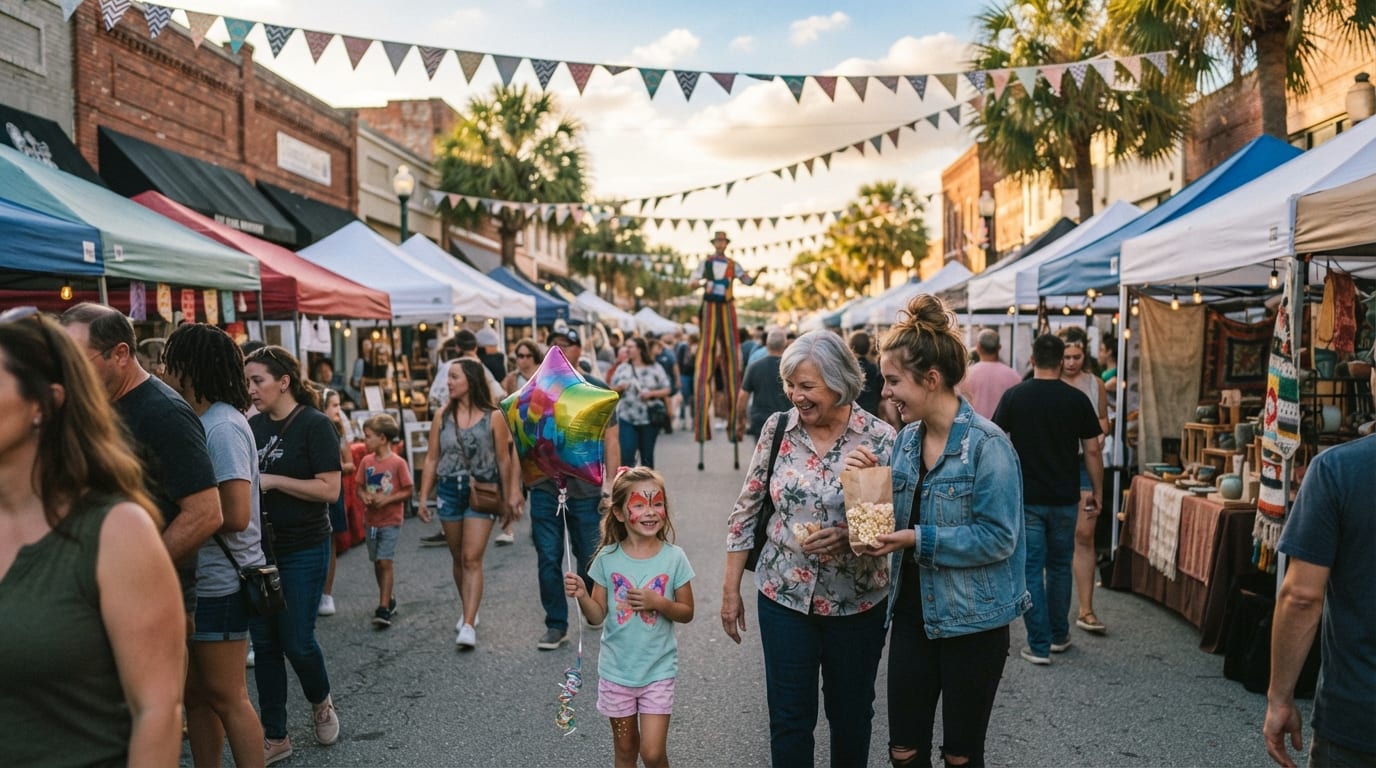
Once the area is set, look for events that fit the time window. Festivals, markets, concerts, comedy, arts sessions, games and family activities can all work, depending on the mood you want. A market may suit a relaxed morning with food and browsing. A festival may suit a family that wants several things in one place. A story time or craft activity may be better for younger children who like a clear task and a calmer pace.
A map view can help here because it shows how events sit in relation to each other. townwild.com is one place that frames concerts, games, comedy, festivals, family activities, markets, arts and other local events on an interactive map. That kind of overview is useful when you are trying to see whether two or three nearby options could fit together without a lot of crossing back and forth.
Check the age fit honestly
Read each event description with your children in mind, one by one. An activity labelled for families may still lean toward older children, while a young-child session may bore a child who wants more movement. Look for clues about the age range, the type of play, the noise level and how long the activity lasts. If the listing mentions a play area, note whether it appears to be linked to the event or simply nearby.
Be realistic about what your children enjoy, not what sounds educational or impressive. Some children like watching a performance from the side before joining in. Others want to touch, build, run or ask questions straight away. Choose one event that matches the strongest interest in the group, then add a second option as a backup rather than packing the day with promises. A child who feels rushed from one thing to the next may remember the waiting more than the fun.
Work out the practical route of the day
Put the main event in the middle of the plan, with a simple arrival and a simple exit around it. If the event starts at a set time, arrive with enough time to find parking, use the toilet and settle in. If it runs all morning, decide which part matters most and be willing to leave before the end. Families often benefit from stopping while the mood is still good.
Think about where everyone will eat, drink and take a break. Nearby markets or food stalls can be convenient, but they may also be busy at peak times. A planned snack can prevent a difficult pause. If the day includes a craft activity or a story time, check whether it is better before or after food. Younger children usually cope better when they are not trying to sit still while hungry.
When several events are close together, use the map to spot the shortest route between them. Keep walking distances reasonable for the youngest child. If one option looks only a short distance away on paper but involves crossing a busy road or navigating a crowded site, treat it as a bigger move. The day should feel connected, not like a series of separate errands.
Look for the details that can change the plan
Before committing, check the small print that affects comfort and access. An accessible entrance matters if anyone uses a wheelchair, pushchair or mobility aid, or if a child needs a predictable route in and out. Parking may be straightforward at some venues and harder at others, especially during festivals and markets. A short walk from a car park can be fine in good conditions and tiring in heat, cold or heavy rain.

Weather is another practical point. Some events continue in light rain, while others depend on dry ground or clear conditions. Look for a weather policy where one is listed, and keep an indoor option in mind if the forecast turns. This does not mean treating every cloud as a problem. It means having a calm alternative that still feels like a family day rather than a last-minute retreat.
Also check whether family admission is available or whether the event is open access. This is not only about cost. Some events require a timed entry or a ticket per person, which changes how early you need to arrive and how flexible you can be. Knowing that before the day helps avoid disappointment at the gate.
Build in choices without overplanning
The best day plans leave room for children to react to what they find. Give each child a small role in the plan, such as choosing which nearby event to try first or spotting the route between stops. This creates interest without handing the whole day over to one opinion. It also helps older children feel included when the plan is built around a younger sibling.
Keep one flexible hour in the middle or at the end. That hour can absorb delays, extra time at a favourite activity, or a quiet break when the group needs it. If everything runs smoothly, it becomes time for a second event or a slow wander through a market. If things run late, nothing important collapses.
On the day, watch for signs that the plan needs adjusting. Crying, repeated questions, hunger and restlessness are more useful signals than the clock. If a child is overwhelmed, move to a quieter spot rather than pushing through the schedule. If the group is engaged and the next event is close, staying longer may be the better choice.
Finish with an easy ending
End the day somewhere simple. A short walk back to the car, a quiet snack or a predictable route home gives children a chance to wind down. Avoid adding one more event just because there is still daylight. The last part of the day shapes how the whole outing is remembered, and a calm ending often makes the earlier activities feel better in hindsight.

Afterwards, note what worked and what did not. Did the age range suit everyone? Was the travel time manageable? Did the weather policy matter? Was there enough to do without too much structure? Those observations make the next search for kids activities nearby quicker and more accurate. Over time, a family develops a useful sense of which local events suit different moods, seasons and age groups.
townwild.com can be a starting point when the plan is still broad and you want to see what is happening across an area. Use the map to compare options, then rely on your own practical checks to shape the final day. A successful outing is usually not the one with the most events. It is the one where the main activity fits, the route is manageable and everyone still has energy on the way home.